
RPL itself is an assessment pathway. What it produces, once issued by an RTO, is the real answer.
RPL is not itself a qualification. It is the pathway. The certificate it produces, once issued by a registered training organisation, is a genuine, nationally recognised qualification.
It is a fair question, and one that trips people up more than it should. Is RPL a qualification in its own right, or is it just a shortcut that leads to one?
The short answer is that RPL itself is an assessment pathway, not a certificate.
What comes out the other end, when it is issued by a registered training organisation, is a genuine, nationally recognised qualification.
This guide breaks down exactly what that means, what RPL a qualification actually looks like on paper, and how it compares to one earned through full-time study.

This is where most of the confusion starts. RPL, or Recognition of Prior Learning, is the process of assessing someone’s existing skills and experience against the requirements of a qualification. It is not itself a document or a credential.
So is RPL a qualification? Not exactly. It is the method used to earn one. If the assessment goes well, the outcome is either a full qualification or a statement of attainment for partially met units, issued by the assessing RTO.
The distinction matters because it explains why two people can both “do RPL” and walk away with different paperwork, depending on how much of the qualification their evidence actually covers.
A RPL qualification is simply a standard, nationally recognised qualification, a Certificate III, a Diploma, or anything on the Australian Qualifications Framework, awarded through an assessment of prior experience rather than through classroom study.
The certificate itself looks identical to one earned any other way. It carries the same qualification code, the same units of competency, and the same standing with employers and licensing bodies.
What differs is only the pathway taken to get there. Someone who spent ten years doing the work and someone who spent a year in a classroom can end up holding the exact same certificate.
Yes, when it is done properly. Is RPL nationally recognised depends entirely on who issues the outcome. A qualification awarded by an ASQA-registered training organisation, following the requirements set out in the Australian Qualifications Framework, is recognised anywhere in Australia, in exactly the same way a TAFE or university-issued certificate is.
What is not nationally recognised is a certificate from a provider that is not properly registered, or one that skips genuine assessment altogether.
That is why checking a provider’s RTO status on training.gov.au before starting is worth the two minutes it takes.
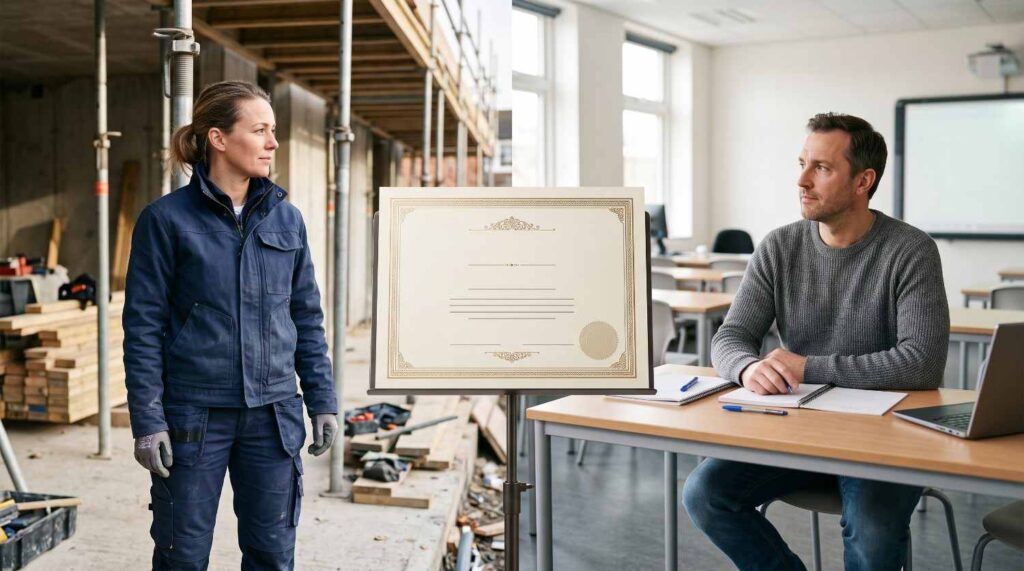
Is RPL recognised in Australia beyond just the certificate itself is a slightly different question, and it matters for regulated trades. The qualification is recognised nationally the moment it is issued.
Whether it unlocks a state licence, such as an electrical or building licence, depends on that state’s separate licensing rules, which usually require the qualification plus additional steps like a licence application and sometimes further checks.
In short, the qualification travels across state lines without any issue. The licence built on top of it is a state-by-state matter, and it pays to check the relevant authority’s requirements early.
The certificate is recognised anywhere in Australia the moment a registered RTO issues it. State lines don't affect this part.
Trades like electrical or building work need a separate state licence on top of the qualification, with its own application and requirements.
Getting an RPL qualification Australia-wide follows a consistent structure, regardless of the trade or the state. An assessor reviews evidence such as work history, references, licences, and photos of completed work against the units of competency in the target qualification.
Three outcomes are possible. A full qualification is issued when every unit is sufficiently covered. A statement of attainment is issued when only some units are met, with a short gap-training plan to cover the rest.
And, occasionally, the assessor finds the evidence does not yet support the qualification at all and recommends further preparation before reapplying.
Every unit of competency is sufficiently covered by the evidence, and the RTO issues the complete, nationally recognised qualification.
Some units are met and others are not yet. A statement of attainment is issued for what's covered, with a short plan for the rest.
The evidence doesn't yet support the qualification. The assessor outlines what's missing so the applicant can reapply once it's addressed.
A RPL certificate is what most people picture when they think about this pathway: a full, completed qualification. A RPL certificate Australia wide carries the same national recognition regardless of which state issued it, provided the RTO is properly registered.
A statement of attainment is different. It lists the specific units of competency someone has been assessed as competent in, without covering the whole qualification. It is not a lesser document, just a partial one, and it usually forms the basis for finishing the remaining units later, either through further RPL or a short course.
The RPL assessment qualification outcome is decided unit by unit rather than all at once. Each unit of competency is checked for evidence that is valid, authentic, current and sufficient.
Only once enough units are ticked off does the RTO issue the full qualification rather than a partial statement.
This unit-by-unit approach is also what makes RPL flexible. Someone missing evidence for one or two units is not sent back to the very beginning.
They are usually given a clear, short list of what still needs covering.

Pulling it all together, a recognition of prior learning qualification is not a different, lesser tier of certificate sitting outside the normal system.
It is the same nationally recognised outcome as any other qualification on the Australian Qualifications Framework, reached through assessed experience instead of coursework.
The only real difference a future employer, licensing body or further-study provider will ever see is the pathway listed on the RTO’s records, not the qualification itself.
On the certificate, there is nothing marking it out as earned “the RPL way”.
Functionally, yes. An RPL recognised qualification and a college-issued one sit on the same national register, use the same qualification codes, and are treated identically by employers, other training providers and, where relevant, state licensing bodies.
Nobody assessing a job application or a licence request can tell which pathway was used, because the certificate does not say.
| Feature | RPL-earned qualification | Classroom-earned qualification |
|---|---|---|
| AQF qualification code | Identical | Identical |
| National recognition | Yes | Yes |
| Issued by | Registered RTO | Registered RTO |
| Employer treatment | Same | Same |
| Path noted on certificate | No | No |
Yes. Is RPL a qualification once it is issued by a properly registered training organisation? Absolutely, and the resulting certificate is a genuine, nationally recognised qualification, identical to one earned through classroom study.
Not usually. RPL is most commonly used for vocational qualifications like Certificates and Diplomas rather than university degrees, though some universities do offer limited recognition of prior learning for entry or credit.
Not from the certificate itself. It carries the same qualification code and wording regardless of how it was earned, so there is nothing on the document distinguishing the pathway.
The RTO issues a statement of attainment for the units that are covered, along with a plan for closing the remaining gaps, rather than refusing the application outright.
Is RPL a formal qualification? Once it is issued by a registered training organisation, yes, in every sense that matters.
It sits on the same Australian Qualifications Framework, carries the same national recognition, and is treated the same way by employers and licensing bodies as a classroom-earned certificate.
The only thing that differs is the road taken to get there. Anyone wondering whether their own experience would qualify can get in touch with KMH Training & Consultancy for a free eligibility check before deciding on a pathway.